
Bringing your (k)nowledge to Antigravity
How we built a resilient and developer-centric integration between Nowledge Mem and Google Antigravity 2.0.
How we built a resilient and developer-centric integration between Nowledge Mem and Google Antigravity 2.0.
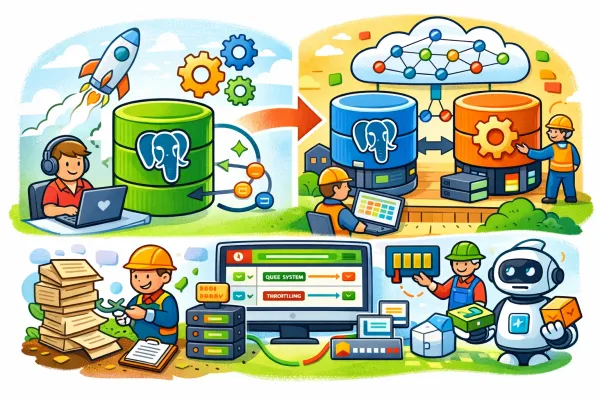
When you first start with DBOS, the magic is in the simplicity: your database is the orchestrator. You don't need to manage a separate cluster or navigate complex RPC configurations—you just use Postgres. 🙋If you are here and are wondering what DBOS is, then maybe check out
The "What vs. How" split often builds silos instead of bridges. By reframing our work as advocacies for the Why, the What, and the How, we can move beyond the "feature factory" and build products that deliver meaningful value to our customers and purpose to our teams.

Struggling with WIFIonICE on your Linux distro? Your secure DNS configuration might be blocking the login page. This guide provides a quick fix to get you online on Deutsche Bahn trains without compromising your privacy on other networks.

Indecisive leadership creates "Leadership Debt," a hidden liability that stalls projects, demotivates teams, and cripples innovation. Building psychological safety and contextual decision-making systems is key to high-performing engineering teams.

Radical Candor alone can backfire if trust and safety are missing. Build resilient engineering teams by focusing first on psychological safety and the TAPPs pillars: Trust, Autonomy, Purpose, and Psychological Safety. Move beyond buzzwords—become a cultural architect.
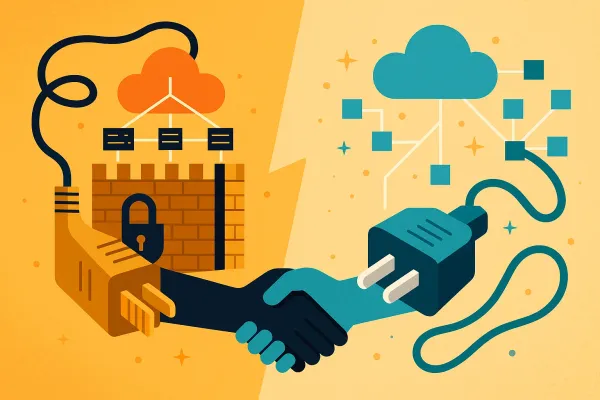
The painful choice between proprietary performance and open economics is over. The fabric schism has ended. As performance equalizes, the overwhelming TCO and strategic advantages of open Ethernet make it the only logical path forward for AI at scale.
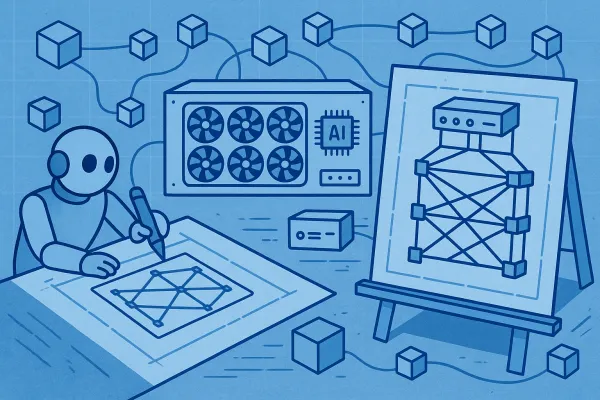
How do you actually build a 100,000-GPU cluster? This blueprint outlines a practical reference architecture: a hybrid model using proprietary links for scale-up and open UEC Ethernet for the massive scale-out, all tied together by the DPU.
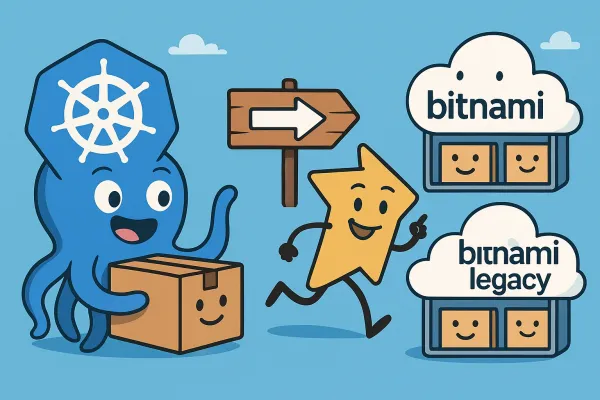
Bitnami is moving older container images from docker.io/bitnami to docker.io/bitnamilegacy in August 2025. Use Kubernetes containerd registry remapping via a DaemonSet to transparently redirect image pulls, ensuring smooth migration without immediate manifest changes.

The most expensive network isn't always the best. As open Ethernet closes the performance gap, the real math comes down to Performance-Adjusted TCO. When speed is equal, the lower cost of hardware and people becomes the deciding factor.
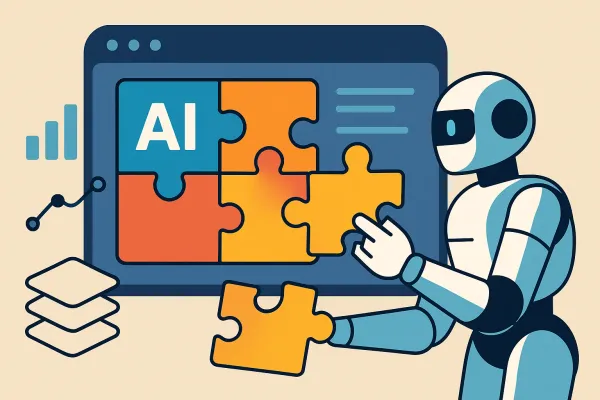
Enterprise AI is shifting from giant, costly models to efficient, specialized Small Language Models (SLMs) working in teams. This composable approach boosts accuracy, cuts costs, enhances privacy, and enables on-premise deployment—transforming AI into a competitive advantage for 2026 and beyond.

The battle for AI networking is a clash of philosophies. NVIDIA's integrated fortress offers turnkey performance at a proprietary cost. The Open Alliance bets on collaboration and open standards. Your choice is more than tech—it's a strategic vote.
Network
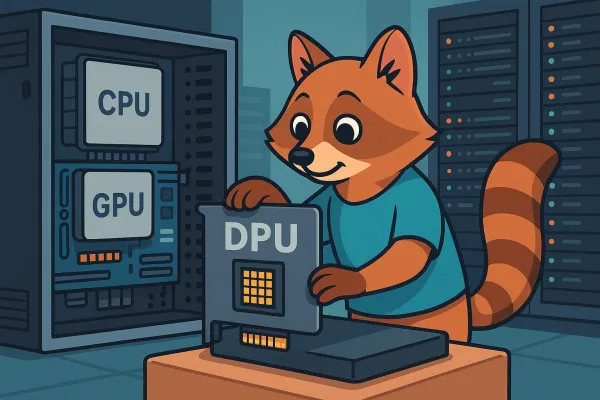
Your multi-million dollar GPUs are wasting time on chores. The DPU is the third pillar of compute, a specialized processor that offloads infrastructure tasks, freeing up your CPU/GPU and enabling the entire business model of the secure AI cloud.

Observability
Your app looks fine on the surface, but users say it's failing. Traditional logs can't explain why. Enter OpenLLMetry and OpenInference—tools that bring clarity to AI observability by capturing rich, standardized telemetry from your LLM stack.

Network
Traditional networks create traffic jams. Ultra Ethernet's secret weapons are packet spraying and flexible order—a new design that eliminates hotspots and unlocks the full power of the fabric by breaking all the old rules of packet delivery.
Network
Standard Ethernet can't handle AI. Early attempts were brittle patches on a flawed foundation. Now, a massive industry alliance is re-architecting it from the ground up. This is the story of the Ultra Ethernet Consortium's revolution.

Observability
LLM observability is key for reliable AI apps. Traditional monitoring misses semantic errors. This guide covers four essentials: tracing, evaluation, prompt management, and analytics to build robust generative AI solutions.
How To
Want to use an npm package without installing Node.js? Learn how to use a simple shell alias with Podman or Docker to run any tool in an isolated container. This keeps your host system clean while giving you on-demand access to any package. Here’s how to set it up.

Network
For over two decades, InfiniBand has powered the fastest AI clusters through native lossless design, RDMA, and in-network computing—making it the performance king. Yet, NVIDIA’s tight integration and high costs have hyperscalers seeking open, Ethernet-based alternatives.
Data Center
AI breakthroughs aren’t just about GPUs—networks are the real bottleneck. Large-scale AI training jobs depend on rapid, lossless communication; even a 0.1% packet loss can slash GPU utilization by 13%. Job completion time now depends on robust, predictable network design.

Leadership
Is your workplace saying one thing but doing another? Discover how cognitive dissonance erodes trust, sparks stress, and what leaders can do to build a culture of true alignment and engagement.
Artificial Intelligence
Agentic AI is transforming the field, enabling fast, efficient, and affordable automation far beyond chatbots through small, specialized models. These Small Language Models (SLMs) can outperform large models in real-world tasks, powering the next generation of enterprise and on-device AI.
OpenShift
Know Kubernetes? You're closer to mastering OpenShift than you think. It's the K8s you know, but with enterprise power-ups built-in. Learn the key differences—from its strict security model to traffic management—and use our cheat sheet to get your apps running on OpenShift today.
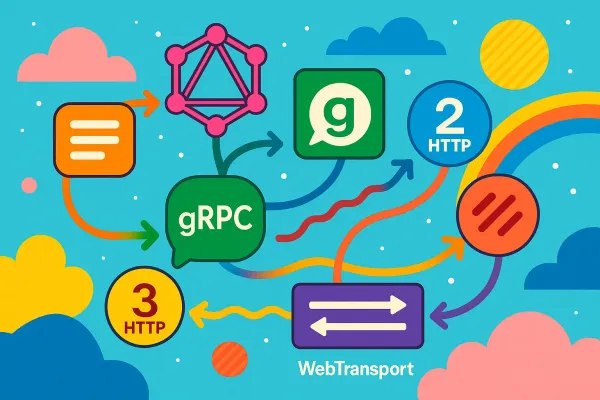
The post explores modern communication protocols—REST, GraphQL, gRPC, HTTP/2, HTTP/3, Protocol Buffers over HTTP, and WebTransport—offering practical recommendations for backend, frontend, and API layers, examining tradeoffs in performance, compatibility, and maintainability.